
The Home Staging Myths That Are Costing Sellers Money

Let's be honest — there's a lot of bad advice floating around about home staging. And unfortunately, believing the wrong things can cost you time, money, and serious negotiating power. Today, we're cutting through the noise and debunking the four most common staging myths that sellers still fall for in today's market. The data is clear. The results are real. And the stakes are higher than most sellers realize.

Myth #1: "Staging Is Only for Luxury Homes"
This might be the most damaging myth of all — because it gives everyday sellers a reason to skip one of the most powerful tools available to them.
Here's the thing: staging works at every price point. A staged $300,000 home doesn't just look better — it competes better. And the numbers prove it.
The NAR's 2025 Profile of Home Staging found that nearly 30% of real estate agents saw staging lead to a 1–10% increase in what buyers offered. On a $400,000 home, that's potentially $4,000 to $40,000 more in your pocket — from a staging investment that costs a fraction of that. RESA tracked real transactions and found that sellers averaged $23.34 back for every single dollar they put into professional staging.
That's not a luxury-home stat. That's just math.

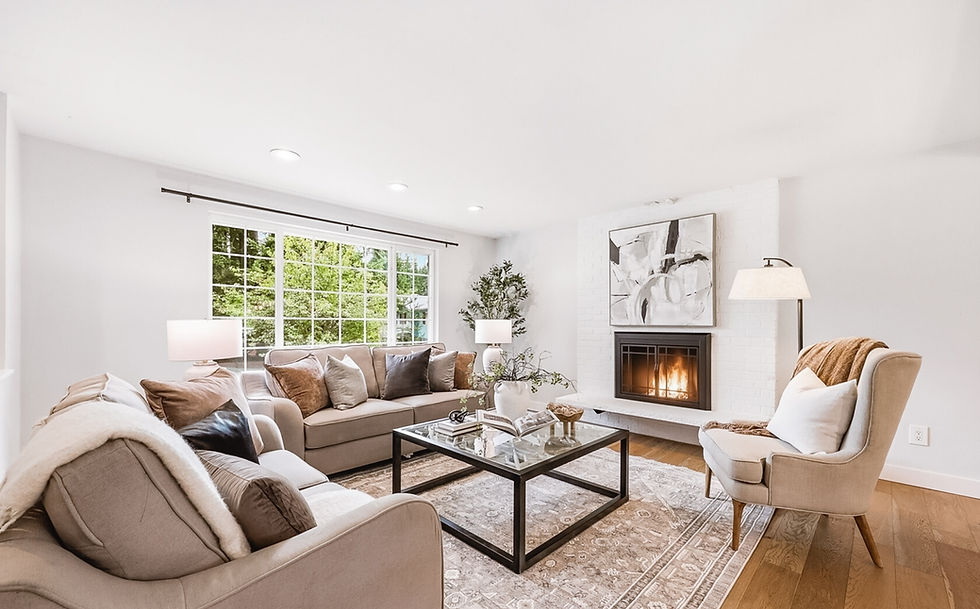
Staging isn't about making a home look expensive. It's about helping buyers emotionally connect with the space, picture their life there, and feel confident making a strong offer. That happens at every price point. Don't talk yourself out of it.
Myth #2: "Buyers Can Visualize"
This one sounds reasonable. But the research — and the experience of anyone who has sold homes professionally — tells a very different story.
The NAR's 2025 Profile of Home Staging found that 83% of buyers' agents said staging made it easier for buyers to see a property as their future home — and that number has barely moved in nearly a decade.
Think about what that means: the vast majority of buyers need help seeing past what's in front of them. An empty room makes it impossible to gauge scale. A cluttered room pulls attention away from the home itself. Personal furniture and décor make buyers feel like they're touring someone else's life, not imagining their own.

Staging also gets buyers through the door before they even visit. One in three buyers' agents said their clients were more likely to book a showing after seeing a staged home online. And with 100% of buyers starting their search on the internet, that first impression matters more than ever.
Here's another number worth sitting with: 58% of real estate professionals say buyers are actually disappointed when homes don't live up to what they've seen on TV. Whether that's fair or not, it's the market sellers are competing in right now. Staging closes that gap — and turns browsers into buyers.
Myth #3: "The Market Is Too Hot to Need Staging"
A hot market is not a free pass. It just means the stakes are higher. Yes, homes may be moving quickly — but staging is what moves them faster and for more money.
The NAR's 2025 data showed that nearly half of sellers' agents (49%) observed staging reduced the time their listings spent on the market. RESA's quarterly data backs that up, with professionally staged homes averaging just 9–19 days on market compared to unstaged homes that sat 33–73% longer.
And those extra days cost money. Every week a home sits unsold adds carrying costs — mortgage payments, utilities, insurance — and quietly chips away at your negotiating power. Research shows that each additional week on the market can shave an average of 1.2% off the final sale price. That adds up fast.

A well-staged home also photographs better, which matters enormously right now. Listings with professional photos get 118% more online views. More views mean more showings. More showings mean more competition. More competition means better offers.
In a hot market, staging isn't something you do because you have to. It's something you do because you want every possible advantage working in your favor.
Myth #4: "We'll Stage If It Doesn't Sell"
This is the most well-intentioned myth on the list — and one of the most costly.
The problem is timing. The first two weeks on the market are when your listing gets the most attention, the most traffic, and the most serious buyers. Once that window closes, it's very hard to get it back. Homes that come back on the market with new photos or fresh staging after 30+ days rarely recover their full pricing power. Buyers notice. They wonder what's wrong. And they negotiate accordingly.
The numbers tell the same story from a different angle. RESA found that sellers who invested around 1% of their sale price into upfront staging saw returns of 5–15% over asking price.

Meanwhile, sellers who skipped staging and had to reduce their price? That reduction was, on average, five to twenty times more than what staging would have cost. Waiting to stage doesn't save money. It usually costs a lot more of it.
Stage before you list. Every time.
The Bottom Line
Staging myths don't just spread misinformation — they cost sellers real money. Whether it's a missed offer, a lower sale price, or a home that sits on the market longer than it should, the consequences are measurable.
The data from NAR, RESA, and real agents working real deals all points to the same place: staged homes sell faster, attract more buyers, and get higher offers. The investment is modest. The return is not. And the best time to take it seriously is before your home ever hits the market.
Have questions about how staging could impact your sale? Schedule a Consultation — we'd love to help.


Comments